


MathHero: Math Games for Kids
4.6538.00 Reviews
App Specs
- Version
- 12.3.1
- Updated On
- License
- Free
- Downloads
- 1,000,000+
- Developer
- Speedymind LLC
- Categories
- Educational
- Platform
- Android
Screenshots

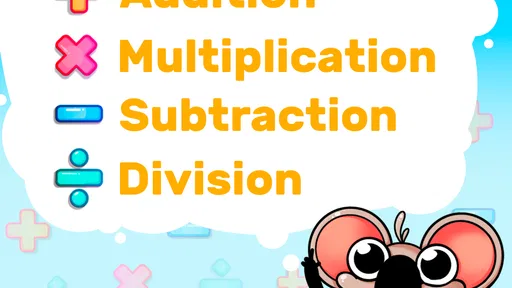
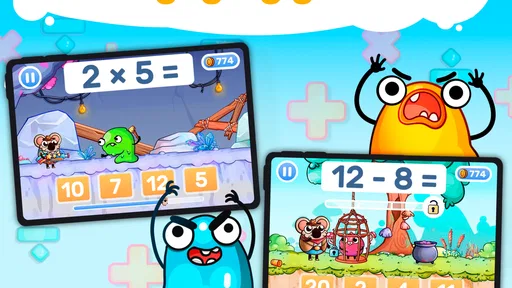

 Analysis by AppCompare
I approach children’s math games with one practical question: can a child return to the activity willingly, and does the practice still feel worthwhile once the novelty wears off? MathHero: Math Games for Kids aims to make arithmetic feel like play rather than another worksheet. In my experience, its strongest use is as a short, repeatable practice session alongside a child’s normal learning—not as a replacement for a teacher, a textbook, or patient help from an adult.
A routine that works better than a long session
I would start by letting a child explore the game with an adult nearby, then settle on a simple routine: open it at a predictable time, play for a short stretch, and stop before frustration takes over. That might be after breakfast, during a quiet moment before homework, or while waiting for an appointment. The point is to make practice easy to begin, not to turn every spare minute into a lesson.
For example, if a child is reluctant to work through arithmetic after school, I’d offer a game session first and then use a question they encountered as a bridge to homework. That keeps the app in a supporting role. If an answer causes confusion, pause and talk through the reasoning rather than encouraging repeated guessing just to move forward. The game can create interest; a grown-up can help connect that interest to understanding.
Set expectations before handing over the device
MathHero is an educational game from Speedymind LLC, and it is free to start, with optional in-app purchases. I would check the purchase settings on the device before giving it to a child, particularly if the device is shared or payment details are already saved. The existence of purchases does not mean a child needs to buy anything to try the game, but it is sensible to agree on the household rule first and avoid a surprise at checkout.
The game is rated for everyone, but that broad age label does not tell you whether a particular child will find the pace, presentation, or math level comfortable. I’d let the child try it while I’m present, then pay attention to whether they can navigate without repeated help and whether the questions feel manageable. A younger learner may need an adult to turn play into a conversation; an older child may prefer a more direct, less playful practice tool.
When choosing a starting point, I’d resist the urge to push toward harder questions simply because a child answers quickly. Speed and understanding are not the same thing. A useful habit is to ask the child to explain one answer aloud after a round. If they can describe why it works, the session has done more than keep them tapping; if they cannot, that gives you a clear cue to practise the idea away from the screen.
Use repetition deliberately, not automatically
Math practice benefits from revisiting skills, but repetition can become dull if every session feels like a test. I’d alternate the game with ordinary moments that use the same kind of thinking: counting items while putting them away, estimating a small total while shopping, or working out how many pieces each person gets at snack time. Those examples make the practice feel relevant without asking the app to teach everything on its own.
Worth Reading Before You Choose

Baby Panda World Brings Quick Play to Modern Phones, but Its Game Library Feels Busy

ESPN’s Live Game View Makes Following Close Games Easier

QuizzLand Review: A Good Fit for Short Trivia Breaks, Not Every Player

Basketball Stars: Multiplayer Is Fast, but Can It Recover When Matches Go Wrong?

WEBTOON Turns Phone Updates Into a Better Reading Routine

Link to Windows Runs on Shared Habits, Not Social Feeds
A good pattern is to keep sessions short and notice the type of question that makes a child hesitate. Rather than treating a wrong answer as a reason to keep going until they get it right, I’d pause, explain the idea in a different way, and return later. This is especially helpful for children who become discouraged by visible progress markers or who interpret a mistake as failure. The reward elements may encourage some players, but reassurance from an adult still matters.
Where it sits among children’s math options
Compared with a paper workbook, MathHero is more playful and can be easier to persuade a child to open, while a workbook makes it simpler for an adult to see each written step. Compared with a general-purpose learning video, a game asks the child to respond rather than only watch, though that interaction alone does not guarantee careful understanding. I see it as one option for practice, not a universal winner over other ways of learning.
It is a particularly reasonable fit for families looking for a free first try at a math game, and for children who respond well to colorful, game-based practice. A child who needs a calm, distraction-light environment may do better with paper exercises or an adult working beside them. Likewise, if the immediate goal is a specific lesson taught in a particular way, a teacher’s materials or a targeted practice resource may be a closer match than a broad game.
What the store details mean in everyday use
The game has a 4.6 average from around 42,000 ratings and more than one million installs, which suggests that many families have tried it. I treat those figures as context, not a promise that every child will enjoy it. A child’s age, confidence with arithmetic, and tolerance for game rewards will shape the experience far more than popularity alone.
It launched on October 31, 2020, and its current version is 12.3.1. It is free, with in-app purchases ranging from $0.99 to $59.99 per item, and it is rated for everyone. The minimum operating-system requirement is 7.0. I’d check that the device meets the requirement and review any purchase controls before setting up a child’s session. The listing’s 538 reviews are another place to look for recent user experiences, but I would still judge the game by trying it with the child who will use it.
One practical question parents often have is whether the game can stand in for school practice. I would not rely on it that way. It can make extra arithmetic practice more inviting, but children still benefit from seeing methods explained, working through problems at their own pace, and asking questions when they are stuck. Another useful question is whether it suits independent play: some children may be comfortable exploring, while others will get more from it if an adult helps them connect a game question to a lesson.
Families also need to decide what counts as a successful session. I would not measure it only by time spent or by how many rewards appear. A child who has practised calmly, noticed a pattern, or become more willing to try a problem has made useful progress even if they stop before they feel like a math expert. If play turns into bargaining for purchases, pressure to beat someone else, or a source of tears, I’d change the routine or choose a quieter alternative.
Ever felt like finding an app that makes math fun for kids is like searching for a needle in a haystack? Well, let me introduce you to MathHero: Math Games for Kids. I stumbled upon this gem while trying to find a way to make math less of a chore and more of an adventure for my little ones. And boy, did it deliver!
First Impressions
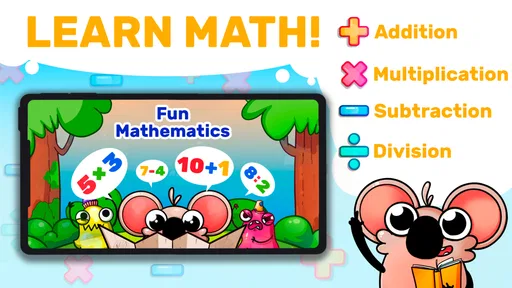
Downloading MathHero: Math Games for Kids was a breeze. It's available on both Android and iOS, so no one’s left out. The first thing that caught my eye was the colorful and inviting interface. It immediately screams fun, which is exactly what you need to get kids excited about math. The app is designed with kids in mind, so everything is intuitive and easy to navigate. No rocket science here, just plain, good fun.
Diving into the Features
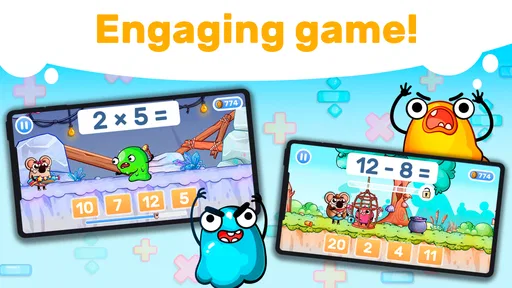
Once inside, the array of games available is impressive. We're talking about everything from basic arithmetic to more complex problems as kids advance. The variety ensures that kids of different ages and math skills can find something that challenges them just right. What’s really cool is the progressive nature of the games. Kids start with simpler tasks and gradually move to more challenging problems, which keeps them engaged without overwhelming them.
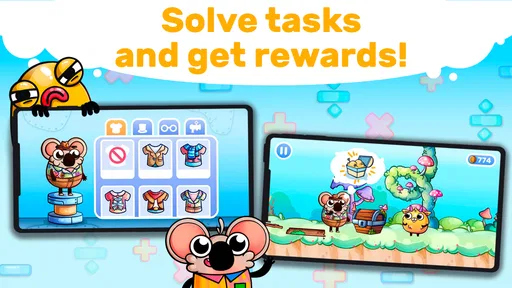
The app also features a reward system. Kids earn stars and badges as they complete levels, which is a fantastic way to keep them motivated. Trust me, seeing my kid's face light up when they earn a new badge is priceless!
Why Kids Love It
So, what makes MathHero: Math Games for Kids a winner in the eyes of kids? It’s the interactivity and the way it transforms math into a game. This isn’t just about solving equations; it’s about embarking on a journey where every correct answer is a step forward. The graphics are vibrant, and the characters are engaging, making the whole experience fun rather than tedious.
Plus, there’s a bit of healthy competition. Kids can see how they stack up against their peers, which adds a layer of excitement. It’s like a math Olympics, and who doesn’t love a bit of friendly competition?
Parental Perspective
As a parent, one of my top concerns is the educational value of an app. With MathHero: Math Games for Kids, I can rest easy. The app doesn’t just entertain; it educates. The content is aligned with school curriculums, ensuring that the skills kids are practicing are relevant to their studies. Another plus is the parental dashboard, which allows us to track progress and see where our kids are excelling or might need a bit more practice. It's like having a mini-report card right on your phone.
And the best part? The app is safe. There are no ads or in-app purchases that could lead to unexpected charges or unwanted content. It’s a safe environment for kids to learn and play.
Room for Improvement?
No app is perfect, and while MathHero: Math Games for Kids is pretty awesome, there are a few things that could make it even better. For instance, adding a multiplayer feature could be a fun way for friends to play together and learn. Also, while the app is mostly intuitive, a quick tutorial at the beginning could help first-time users get the hang of it even quicker.
But these are small tweaks in the grand scheme of things. The app delivers where it matters most: making math enjoyable and educational.
Final Thoughts
In a world where screen time is often viewed negatively, MathHero: Math Games for Kids turns it into a positive experience. It’s a tool that combines education with entertainment, and that’s a win-win in my book. If you're looking for a way to make math more engaging for your kids, give this app a try. It might just transform how they view math forever. So, what are you waiting for? Go ahead and download it, and let the math adventures begin!
Choosing a steady next step
My overall recommendation is to treat MathHero as a small part of a learning routine rather than the whole routine. It is most useful when a child is willing to play, the questions remain within reach, and an adult is ready to notice when a quick explanation would help. If the child is already confident with the material, the game can offer a more inviting way to revisit it; if they are struggling with the underlying idea, direct teaching may be the better next step.
That distinction helps answer the biggest practical question: should you try it? I would, especially for a child who enjoys colorful games and needs a gentler route into regular arithmetic practice. I would skip it for a child who finds game rewards distracting, needs a specific curriculum sequence, or learns best through quiet written work. Either way, a short trial with clear expectations gives you a better answer than assuming that one educational game suits every learner.
Pros
- Engaging math challenges for kids.
- Adaptive learning adjusts to skill level.
- Colorful and intuitive interface.
- Parental controls ensure safe usage.
- Offline access available for travel.
Cons
- Limited free content without purchase.
- Ads can be distracting for children.
- Requires frequent updates for new levels.
- Some games too challenging for younger kids.
- In-app purchases can add up quickly.
FAQs for MathHero: Math Games for Kids
What age group is MathHero: Math Games for Kids suitable for?
MathHero is designed for children aged 5 to 12. It offers a range of math challenges tailored to different skill levels, ensuring that both beginners and more advanced young learners can benefit. The app adjusts difficulty based on the child's progress, making it a versatile tool for various age groups within the specified range.
Does MathHero require an internet connection to function?
No, MathHero operates offline, which allows kids to play and learn without needing an internet connection. This feature is especially useful for parents who want to monitor screen time while ensuring their children can access educational content anytime, even in locations without internet access.
Are there in-app purchases in MathHero: Math Games for Kids?
Yes, MathHero includes optional in-app purchases. These purchases can unlock additional content and features, such as more advanced levels or special game modes. However, the core educational content is available for free, allowing children to learn and play without needing to make a purchase.
Is MathHero available on both Android and iOS platforms?
Yes, MathHero: Math Games for Kids is available for download on both Android and iOS devices. Users can find it on the Google Play Store for Android devices and the Apple App Store for iOS devices, making it accessible to a wide range of users regardless of their preferred platform.
How does MathHero ensure the safety and privacy of its young users?
MathHero prioritizes the safety and privacy of its users by complying with child safety standards. The app does not collect personal data from children and offers parental controls to manage in-app purchases and screen time. Additionally, it provides a safe, ad-free environment to ensure a distraction-free learning experience.


